
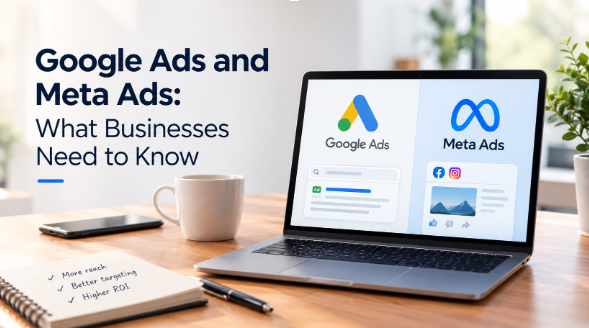
Choosing between Google Ads, Meta Ads or both depends on how customers discover and make decisions about a business. While using both platforms can expand reach, splitting the budget does not always lead to better results.
The article, ”Should Businesses Run Google Ads and Meta Ads Together?”, explains how each platform works, when businesses can benefit from using both and how to allocate advertising budgets effectively.
Key Takeaways:
- Different purposes: Google Ads captures people actively searching, while Meta Ads helps create awareness and introduce products or services.
- They can work together: Meta can build awareness and support retargeting, while Google can capture customers when they are ready to search.
- Budget matters: Businesses with limited budgets may be better off focusing on one platform rather than spreading spend too thinly.
- Focus on results: Cost per lead, conversions, revenue, return on ad spend and lead quality are more useful than clicks and impressions alone.
- No fixed budget split: A 50/50 split is not right for every business. The budget should reflect performance, customer behaviour and profitability.

When Should Businesses Use Both?
Using Google and Meta together can be useful when customers need several interactions before making a purchase. Someone might discover a business on Instagram, visit its website and later search for the service on Google.
However, businesses with strong search demand or limited budgets may benefit from starting with one platform and expanding once there is enough data and budget.
Make Your Advertising Budget Work Harder
The right strategy starts with understanding your audience, customer journey and business goals. Google and Meta should each have a clear role rather than being used simply because they are popular platforms.
Businesses struggling with campaign performance, tracking or budget allocation may also benefit from professional paid advertising support.